| |
Topic: Why wasn’t the Fieseler Storch used for Naval reconnaissance? |
![]() ![]() ![]() Click Here to Join us Today! FAQ/Rules - Search - Military Photo Gallery |
|
![]() |
| |
| | Post 1 | |
| Tribuni Angusticlavii | Post; Why wasn’t the Fieseler Storch used for Naval reconnaissance?I suspect that super destroyers or light cruisers with a rear ‘heli-deck’ to accommodate half a dozen Storch’s would have caused the Royal Navy substantially more problems than much larger surface ships with their limited number of fair weather seaplanes. Quote:
__________________ Voice or no voice, the people can always be brought to the bidding of the leaders. That is easy. All you have to do is to tell them they are being attacked, and denounce the pacifists for lack of patriotism and exposing the country to danger. It works the same in any country. Herman Goering | |
| |
| | Post 2 | ||||||||
| Tribuni Angusticlavii | Quote:
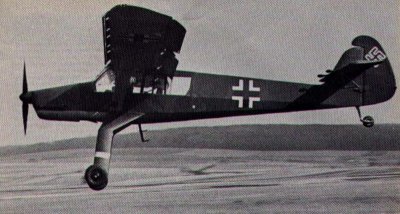
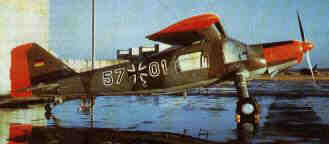
I never had the chance to fly one, but I did fly its modern (kind of) sequel, the Do 27, for many years, both in the Luftwaffe as trainer as well as later as a private pilot: Itself developed from the Do 25 (compare the pix below and you will see the similarities), it had very similar STOL capabilities (Storch 50kmh/32mph stall speed at 700kg, Do 27 stall speed 74 kmh/46 mph at 1100kg) and the same slats and profile (but could seat 4 pax). In a good headwind it could also land virtually vertically or backwards as seen in this vid:
From this experience I think the Storch would not have made a good plane to land on a heli type of deck: Given the turbulent wake induced behind a ships deck structure and chimneys the Storch had too little mass to maneuver safely at the speeds given, which in turn means safe recovery would not have been guaranteed most of the time. Also, I do not recall the wings of the Fieseler were fold back, but admittedly I might be wrong here. Interesting anecdote about the Storch: Quote:
![]() ![]() ![]() My 2c, Rattler P.S.: The Do 27 was one of the "friendliest" a/c I have ever had the chance to move, here a nice vid of 50 yrs Do 27 with spectacular liftoffs and landings and also some good pix on profile and the typical slats for both types:
__________________ "Tactics" describes what to do when something has to be done. "Strategy" describes what to do when nothing has to be done... (Savielly Tartakower): The Rattler Way Of Life (thanks! Solideo): http://www.youtube.com/watch?v=n9v3Vyr5o2Q Last edited by rattler; May 14th, 2009 at 20:40.. Reason: typos... | ||||||||
| | |||||||||
| | Post 3 |
| Tribuni Angusticlavii |
Fascinating stuff Rattler. Yes I thought turbulence would be a factor. Suppose you would have to reroute the smoke stack and attach an elevated deck which might also be useful for clearing the waves. I suspect landing on a small carrier in rough seas was no easy task even with the best of aircraft. |
| |
| | Post 4 |
| Tribunus Laticlavius |
Okay I have seen this plane working and it is impressive, but just what ships would carry it and where would it be stored. Now all this was tried by the British during WW1 and although successful landings were made on a turret of a ship the problems arose from cross winds and heavy gusts of wind. No wind is really steady all the time it varies from minute to minute and this is what caused the death of a few pilots that tried all this in WW1 and made Britain develop the Aircraft Carrier
__________________ LeEnfield Rides again |
| |
| | Post 5 | |
| Tribunus Laticlavius | Quote:
http://www.bismarck-class.dk/technic...formation.html
__________________ We are more often treacherous through weakness than through calculation. ~Francois De La Rochefoucauld | |
| |
| | Post 6 | |
| Tribuni Angusticlavii | Quote:
The emphasis with a storch is on reconnaissance and evasion, when the merchant vessel is sighted perhaps 100s of km away the destroyer closes in for the kill with a single small gun. Alternately the destroyer evades a hostile vessel. An interesting variant is where the aircraft guides the gun from a distance of 5-10 miles in ground visibility of a few miles into a escorted convoy, Hence the convoy escort cannot attack the destroyer. Obviously the allies would try to counter with an aircraft of their own, but I don't think the allies had one with this STOL capability, nor escort carriers in the early days. You could have had hundreds of these ships covering the entire South Atlantic and Indian Ocean for the cost of battleships which were supposed to be used as merchant raiders, you don't need 15 inch guns to sink a merchant vessel. I accept what the others say about cross winds and turbulence though. Perhaps a much larger elevated deck could have been welded on to the rear of these smaller ships. | |
| |
| | Post 7 | |
| Tribunus Laticlavius | Quote:
The Allies had the Westland Lysander as a STOL aircraft and it did the job extremely well, certainly it required more distance to get off the ground but given its size and weight it was still an impressive aircraft. Last edited by MontyB; May 15th, 2009 at 10:40.. | |
| |
| | Post 8 |
| Tribuni Angusticlavii |
Someone once mentioned to me that the Fieseler Storch was the only aeroplane during WW2 that suffered bird strikes on the trailing edge of the wings.
__________________ Adversus solem ne loquitor |
| |
| | Post 9 |
| Tribunus Laticlavius |
To try and land one of those planes on a small area with the ship bucking and rolling in any form of rough seas would have made these planes unusable during any thing like rough weather. Also they become a great fire hazard if a shell hits any where near them.
|
| |
| | Post 10 | |
| Centurion | Quote:
Also, German destroyers were originally designed for service in the Baltic, they were heavily armed but short ranged, so they normally operated within the range of land based aircraft support
__________________ If in doubt...... Panic!!!!!!!! Last edited by redcoat; May 15th, 2009 at 12:27.. | |
| |