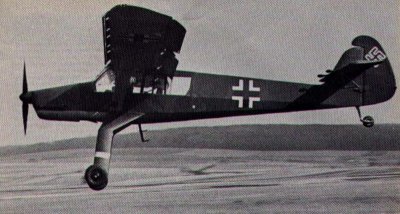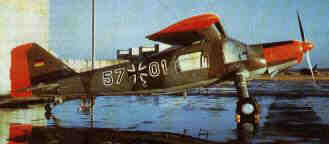
Topic: Why wasn’t the Fieseler Storch used for Naval reconnaissance? 2

Stripesgamer.com


Click Here to Join us Today!
FAQ/Rules - Search - Military Photo Gallery

  International Military Forums > Military History Forums > World War 1 to World War 2 Forum
User Name
Password

 
May 15th, 2009   Post 11
perseus
Tribuni Angusticlavii
 
 
Of course this begs the question why helicopters don't have similar problems since they are notoriously unstable in gusty winds. I was going to suggest a sort of cable which is let down from the undercarriage for accurate positioning of the aircraft. So I had a look at helicopter deck and what do I find?

Quote:
Shipboard landing for some helicopters is assisted though use of a haul-down device that involves attachment of a cable to a probe on the bottom of the aircraft prior to landing. Tension is maintained on the cable as the helicopter descends, assisting the pilot with accurate positioning of the aircraft on the deck; once on deck locking beams close on the probe, locking the aircraft to the flight deck.
http://en.wikipedia.org/wiki/Helicopter_deck

I wonder if the RN considered these when practising landing on the Turrets?

With regard to turbulence perhaps something elevated like this?

__________________

Voice or no voice, the people can always be brought to the bidding of the leaders. That is easy. All you have to do is to tell them they are being attacked, and denounce the pacifists for lack of patriotism and exposing the country to danger. It works the same in any country. Herman Goering

Last edited by perseus; May 15th, 2009 at 18:05..
 
May 15th, 2009   Post 12
Chukpike
Primus Pilus
 
 
Gear

Quote:
Originally Posted by perseus
Of course this begs the question why helicopters don't have similar problems since they are notoriously unstable in gusty winds. I was going to suggest a sort of cable which is let down from the undercarriage for accurate positioning of the aircraft. So I had a look at helicopter deck and what do I find?


http://en.wikipedia.org/wiki/Helicopter_deck

I wonder if the RN considered these when practising landing on the Turrets?
Not sure if this was ever really done. Scares the heck out of me. This makes about as much sense as a motorcycle rider wearing a seat belt. Would you want to be straped to a piece of metal that would pound you to plup if something went wrong?
 
May 15th, 2009   Post 13
LeEnfield
Tribunus Laticlavius
 
 
Gear

Helicopters fly along side the ship then move side ways on to the landing pad and they can set the movements of the helicopter to match those of the ship, some thing a aircraft can never do. The landing pads constructed during WW1 on the turrets were there as they could be installed in a short time and removed in time to use the guns.
__________________
LeEnfield Rides again

 
May 17th, 2009   Post 14
Chukpike
Primus Pilus
 
 
Gear

Here is a picture of a helicopter refueling in the air from the USS Bainbridge DLGN-25. Notice the ships wake, we were steaming at 20+ knots. Since the sea was calm the Helicopter pilot kept almost the exact position throughout the refueling. He could not land to refuel because he would have had to move to close to the missile launcher for a safe landing.
Helio refueling 03s.jpg

This picture gives you an Idea of what LeEnfield was describing.
 
May 19th, 2009   Post 15
mmarsh
Tribunus Laticlavius
 
Gear


What role would it have been used for Naval Reconnaissance? Its range was too short. An Artillery Spotter? Too Slow, not enough ceiling, too vulnerable to just about everything hostile to it. Not to mention the fact that since its not a float plane the Kreigmarine would had had to remove the rear turret of its warships in order to provide sufficient space for operations despite its STOL ability.

Dont get me wrong', I think the stork did its job as a liason/training aircraft incredibly well.
__________________
"My center is giving way, my right is in retreat; situation excellent. I shall attack." -Foch

I get this question a lot. I am from NYC. I fly a French flag because I work for the Paris Office of a International company.
 
May 19th, 2009   Post 16
perseus
Tribuni Angusticlavii
 
 
Quote:
Originally Posted by mmarsh
What role would it have been used for Naval Reconnaissance?
To be honest what started me thinking of the Storch aircraft was the more general question facing German naval industry in the 1930s. Against a numerically superior Royal Navy (RN) what would be the best use of their limited resources?

Perhaps with hindsight the best strategy was to build a combination of U-boats and aircraft carriers rather than battleships. However, some of the disguised merchant raiders also created problems for the RN, particularly in WW1. So I asked the question, would the equivalent resources placed into building dozens of smaller merchant raiders be more effective than using a few large gunned ships?

I think the answer depends partly on reconnaissance, since once the enemy was spotted, a small warship would be able to close quickly to destroy merchantmen with a light gun, or evade the larger enemy warships. So the question then arises what is the best aircraft for reconnaissance on a single gun ship considering that some deck space could be given to a small landing platform? After examining that the stall speed of the Storch was slightly less than the fastest ships I concluded (perhaps wrongly) that this aircraft could land vertically on a moving ship and would be suitable.

I also wondered why the larger merchant raiders were not more successful with their seaplanes. After viewing this http://www.liveleak.com/view?i=d91_1201684471 I speculated that the Arado 196 might not be operational for much of the time due to its inability to land on uneven seas. If fishing Arado’s out of the sea is a better option then landing Storch’s on a small deck, I suppose a small merchant raider ship could launch them using a ramp at the front whilst mounting the main armament at the rear. This effectively becomes a hybrid carrier/destroyer.