
Corocotta
Active member
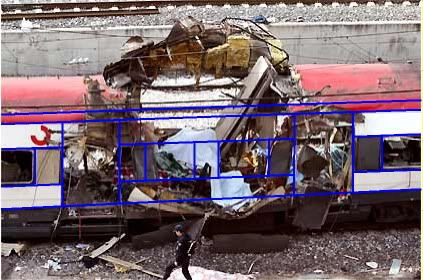
On March 11, 2004, four trains coming into Madrid were attacked , three days before the general elections, scheduled for Sunday, March 14. In total, ten explosions occurred in ten different carriages. One hundred and ninety-two people were killed and over 1500 were wounded.
The police specialized in explosive detection and deactivation, TEDAX, inspected the four trains and found two additional bombs in two different trains , installed in backpacks. While attempting to deactivate them, the two bombs exploded. All the trains were inspected twice by the TEDAX and no additional bombs were found. In the words of the Madrid provincial head of the TEDAX, the sheared metal due to the high velocity explosion in the attacked trains suggested that military explosives, such as C3 or C4 (Semtex) had been used.
The same day of the attacks, the doorman of an apartment building close to the train station in Alcala, a town 35 km east of Madrid, informed the police that he had seen earlier that morning, around 7 a.m., three young men acting suspiciously by a van parked in front of the building where he worked. The police opened the back door of the van and twice dogs trained in the detection of explosives entered the van looking for explosives. Neither dog detected any explosives and the van was towed away to the police headquarters in Canillas, Madrid.
Upon arrival at the police headquarters, the van was inspected again. This time, around 2 p.m., the police found a bag containing detonators and a small amount of explosives, as well as a cassette in Arabic with some Koranic content. Up to that moment, public opinion in Spain was that the author of the attacks was ETA, the Basque terrorist group. But, as the media immediately pointed out, the detonators were different from those normally used by ETA and the Koran cassette suggested a potential Islamic link to the attacks. Subsequent analysis and inspection of the van revealed no fingerprints or DNA present in the vehicle. Some DNA, however, was found in loose pieces of clothing also discovered in the trunk of the van at the Canillas police headquarters.
The morgue for the victims of the attacks was set up at the Madrid fairgrounds (IFEMA). A team of forensic experts conducted the autopsies there and the families of the victims also went there to identify their relatives and their personal belongings. The personal effects collected in the four trains, which had been placed in closed bags in the custody of the police, were transported to IFEMA by judicial order. However, the personal effects of the victims from one of the trains where an additional bomb had been discovered and set off by the TEDAX while trying to deactivate it (El Pozo station) were taken instead to the Puente de Vallecas Police Station. Some of the bags containing personal effects collected at El Pozo station were first taken to IFEMA for a few hours and then transported again to the Puente de Vallecas Police Station, disregarding the judiciary order to bring all personal belongings found in the train to IFEMA. That night, at approximately 2:40 AM as indicated in the parts of the judiciary investigation which have become known to the public, when the police at the Puente de Vallecas station where conducting an inventory of the contents of the bags, a policewoman found another bomb installed in a sports bag. This bomb was successfully deactivated, according to the information released at the time. It contained dynamite manufactured in Spain (GOMA-2 ECO), screws to serve as shrapnel and a mobile phone to set it off. The weight of the travel bag containing the bomb was over 11 kg. The type of dynamite found in this bag seemed to indicate that ETA was not involved in the attacks, as the media informed that this domestic terrorist group had only used titadyne, a different type of dynamite, in the last years. Subsequent analysis of the mobile phone led to the arrest one day later, in the afternoon of March 13, of two Indian Hindus and three Moroccan subjects.
The media reported that an Al-Qaeda cell was responsible for the attacks.
The implication for the electorate was that this attack was a retaliation for the support of Spain´s conservative government for the U.S. led invasion of Irak. From the day of the attack until the polling booths closed on March 14th, the Socialist opposition party (PSOE) accused the government of having concealed the Islamic authorship of the attack so as not to lose votes for having pursued a policy which led to the massacre. The timely arrest of the supposed Islamic terrorist on the eve of the election sealed the Conservative party´s fate as they proceeded to lose and election which they had been widely expected to win.
In the following days other Muslim individuals were arrested. The dynamite contained in the deactivated bomb led to an explosive smuggling ring operating in Asturias, in the north of Spain, out of a mine (Mina Conchita). Spanish individuals were identified as having sold the explosives to the Muslim terrorists.
On April 3, the police surrounded an apartment building in Leganes, 20 km south of Madrid. Reportedly after several hours of heavy exchange of gunfire between the surrounded terrorists and the police, and once that building and those in the immediate neighborhood had been evacuated, the special police force GEO tried to enter the apartment. Then the apartment exploded, killing all seven terrorists and one member of the police force. The media informed that the terrorists had committed suicide.
I continue in the next post (too long):-D
The police specialized in explosive detection and deactivation, TEDAX, inspected the four trains and found two additional bombs in two different trains , installed in backpacks. While attempting to deactivate them, the two bombs exploded. All the trains were inspected twice by the TEDAX and no additional bombs were found. In the words of the Madrid provincial head of the TEDAX, the sheared metal due to the high velocity explosion in the attacked trains suggested that military explosives, such as C3 or C4 (Semtex) had been used.
The same day of the attacks, the doorman of an apartment building close to the train station in Alcala, a town 35 km east of Madrid, informed the police that he had seen earlier that morning, around 7 a.m., three young men acting suspiciously by a van parked in front of the building where he worked. The police opened the back door of the van and twice dogs trained in the detection of explosives entered the van looking for explosives. Neither dog detected any explosives and the van was towed away to the police headquarters in Canillas, Madrid.
Upon arrival at the police headquarters, the van was inspected again. This time, around 2 p.m., the police found a bag containing detonators and a small amount of explosives, as well as a cassette in Arabic with some Koranic content. Up to that moment, public opinion in Spain was that the author of the attacks was ETA, the Basque terrorist group. But, as the media immediately pointed out, the detonators were different from those normally used by ETA and the Koran cassette suggested a potential Islamic link to the attacks. Subsequent analysis and inspection of the van revealed no fingerprints or DNA present in the vehicle. Some DNA, however, was found in loose pieces of clothing also discovered in the trunk of the van at the Canillas police headquarters.
The morgue for the victims of the attacks was set up at the Madrid fairgrounds (IFEMA). A team of forensic experts conducted the autopsies there and the families of the victims also went there to identify their relatives and their personal belongings. The personal effects collected in the four trains, which had been placed in closed bags in the custody of the police, were transported to IFEMA by judicial order. However, the personal effects of the victims from one of the trains where an additional bomb had been discovered and set off by the TEDAX while trying to deactivate it (El Pozo station) were taken instead to the Puente de Vallecas Police Station. Some of the bags containing personal effects collected at El Pozo station were first taken to IFEMA for a few hours and then transported again to the Puente de Vallecas Police Station, disregarding the judiciary order to bring all personal belongings found in the train to IFEMA. That night, at approximately 2:40 AM as indicated in the parts of the judiciary investigation which have become known to the public, when the police at the Puente de Vallecas station where conducting an inventory of the contents of the bags, a policewoman found another bomb installed in a sports bag. This bomb was successfully deactivated, according to the information released at the time. It contained dynamite manufactured in Spain (GOMA-2 ECO), screws to serve as shrapnel and a mobile phone to set it off. The weight of the travel bag containing the bomb was over 11 kg. The type of dynamite found in this bag seemed to indicate that ETA was not involved in the attacks, as the media informed that this domestic terrorist group had only used titadyne, a different type of dynamite, in the last years. Subsequent analysis of the mobile phone led to the arrest one day later, in the afternoon of March 13, of two Indian Hindus and three Moroccan subjects.
The media reported that an Al-Qaeda cell was responsible for the attacks.
The implication for the electorate was that this attack was a retaliation for the support of Spain´s conservative government for the U.S. led invasion of Irak. From the day of the attack until the polling booths closed on March 14th, the Socialist opposition party (PSOE) accused the government of having concealed the Islamic authorship of the attack so as not to lose votes for having pursued a policy which led to the massacre. The timely arrest of the supposed Islamic terrorist on the eve of the election sealed the Conservative party´s fate as they proceeded to lose and election which they had been widely expected to win.
In the following days other Muslim individuals were arrested. The dynamite contained in the deactivated bomb led to an explosive smuggling ring operating in Asturias, in the north of Spain, out of a mine (Mina Conchita). Spanish individuals were identified as having sold the explosives to the Muslim terrorists.
On April 3, the police surrounded an apartment building in Leganes, 20 km south of Madrid. Reportedly after several hours of heavy exchange of gunfire between the surrounded terrorists and the police, and once that building and those in the immediate neighborhood had been evacuated, the special police force GEO tried to enter the apartment. Then the apartment exploded, killing all seven terrorists and one member of the police force. The media informed that the terrorists had committed suicide.
I continue in the next post (too long):-D