
Bacara
Active member
I'm interested in what soliders think about the new land warrior system, i think its a little clumsy and heavy, but i'm only 14 and am not a solider, so i have no valid opinon
Land Warrior integrates small arms with high-tech equipment enabling ground forces to deploy, fight and win on the battlefields of the 21st century. Land Warrior came about in 1991 when an Army study group recommended the service look at the soldier as a complete weapon system. The first priority in Land Warrior is lethality. The second is survivability and the third, command and control. The program will cost $2 billion when 45,000 sets of the equipment are fielded between 2001-2014. The Marine Corps, Air Force and many foreign countries are interested in the system
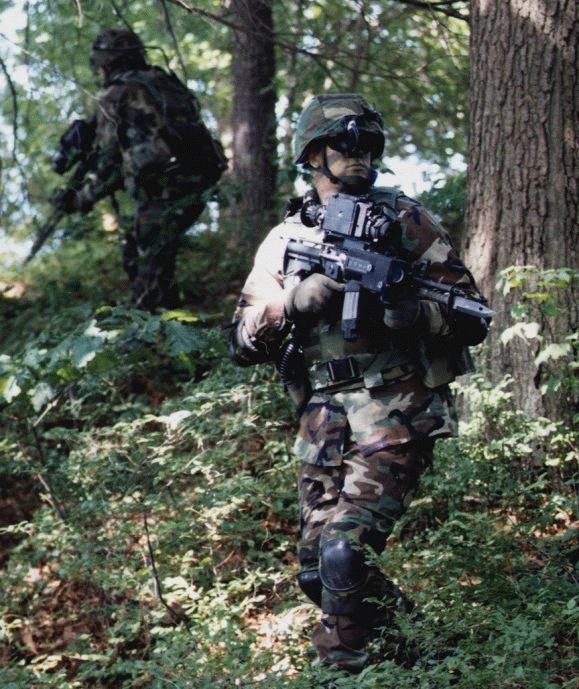
Based on recent advances in communications, sensors, and materials, the Land Warrior System integrates commercial, off-the-shelf technologies into a complete soldier system. For the first time, the soldier's equipment is being designed as if he is an individual, complete weapons platform. Each subsystem and component is designed to and for the soldier. The result: the first integrated soldier fighting system for the dismounted infantryman.
Land Warrior has several subsystems: the weapon, integrated helmet assembly, protective clothing and individual equipment, computer/radio, and software.
Land Warrior integrates small arms with high-tech equipment enabling ground forces to deploy, fight and win on the battlefields of the 21st century. Land Warrior came about in 1991 when an Army study group recommended the service look at the soldier as a complete weapon system. The first priority in Land Warrior is lethality. The second is survivability and the third, command and control. The program will cost $2 billion when 45,000 sets of the equipment are fielded between 2001-2014. The Marine Corps, Air Force and many foreign countries are interested in the system
Based on recent advances in communications, sensors, and materials, the Land Warrior System integrates commercial, off-the-shelf technologies into a complete soldier system. For the first time, the soldier's equipment is being designed as if he is an individual, complete weapons platform. Each subsystem and component is designed to and for the soldier. The result: the first integrated soldier fighting system for the dismounted infantryman.
Land Warrior has several subsystems: the weapon, integrated helmet assembly, protective clothing and individual equipment, computer/radio, and software.
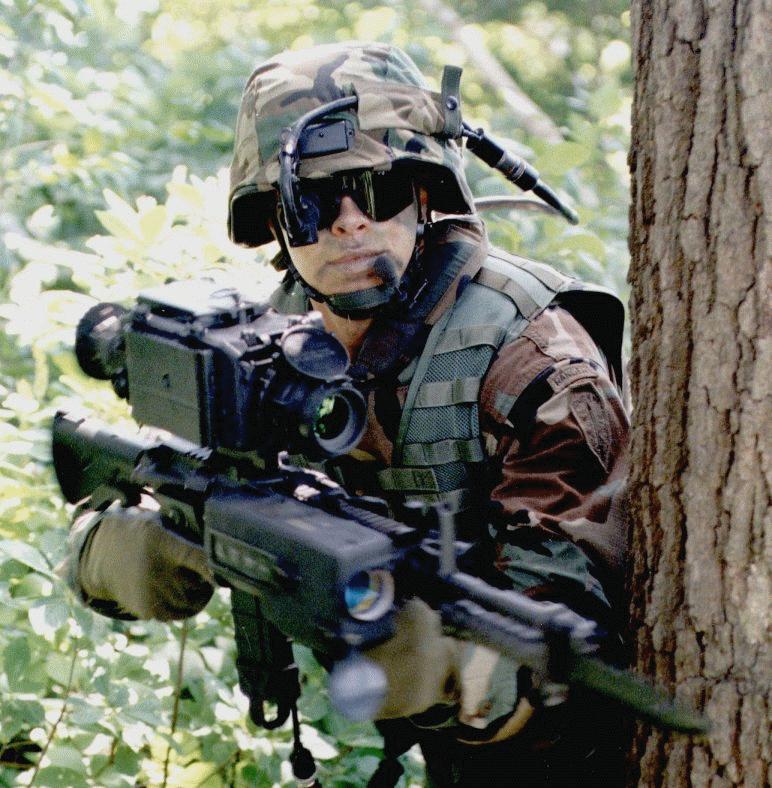
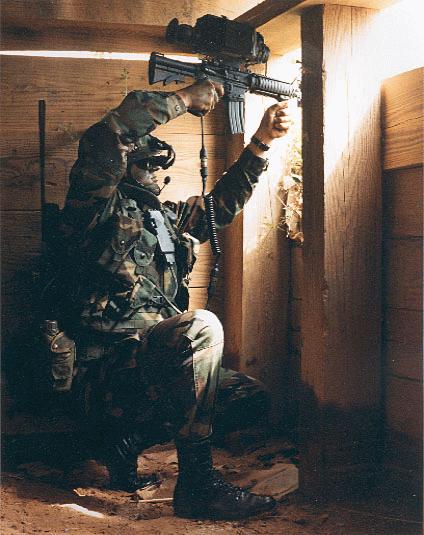
The Weapon Subsystem is built around the M-16/M-4 modular carbine. The weapon subsystem includes key electrical optical components such as the TWS, video camera, and the laser rangefinder/digital compass (LRF/DC). The LRF/DC provides the soldier with range and direction information. When coupled with his individual location from GPS, the soldier has accurate target location when calling for indirect fire and combat identification. This system will allow infantrymen to operate in all types of weather and at night. In conjunction with other components, a soldier can even shoot around corners without exposing himself to enemy fire.
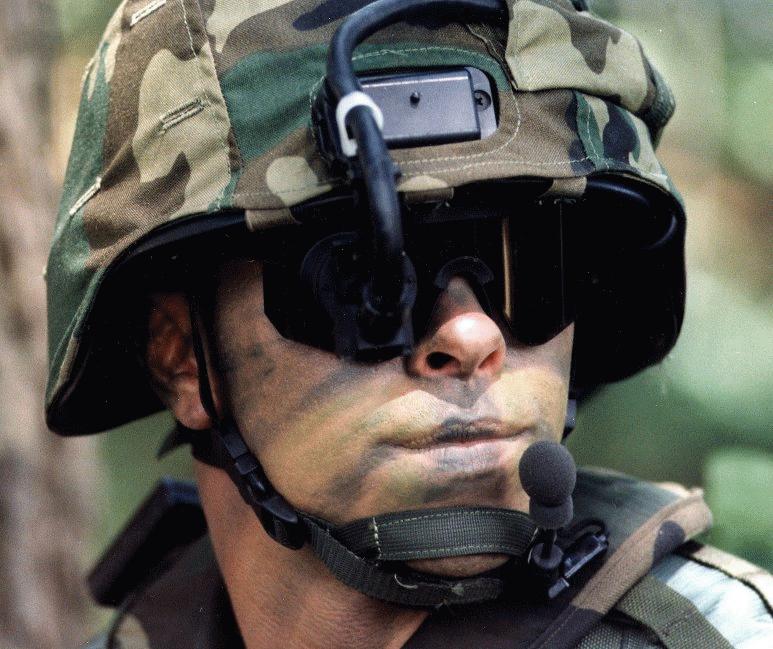
The Integrated Helmet Assembly Subsystem (IHAS) uses advanced materials to provide ballistic protection at less weight than the current helmet shell. The integrated helmet assembly is lighter and more comfortable than today's helmet. The IHAS's helmet mounted computer and sensor display is the soldier's interface to the other subsystems and to the digital battlefield. Through the helmet mounted display, the soldier can view computer-generated graphical data, digital maps, intelligence information, troop locations and imagery from his weapon-mounted Thermal Weapon Sight (TWS) and video camera. This new capability allows the soldier to view around a corner, acquire a target, then fire the weapon without exposing himself, beyond his arms and hands, to the enemy. By scanning an area with his weapon's thermal sight, the soldier will be able to see an area's characteristics, including terrain and enemy positions, and will be able to see through obscurants. The thermal images will appear on a miniature helmet-mounted display. The Night Sensor Display will integrate a helmet mounted display with an image intensifier for access to his computer sensors as cited above. This will allow the soldier to maneuver and engage targets under cover of darkness.
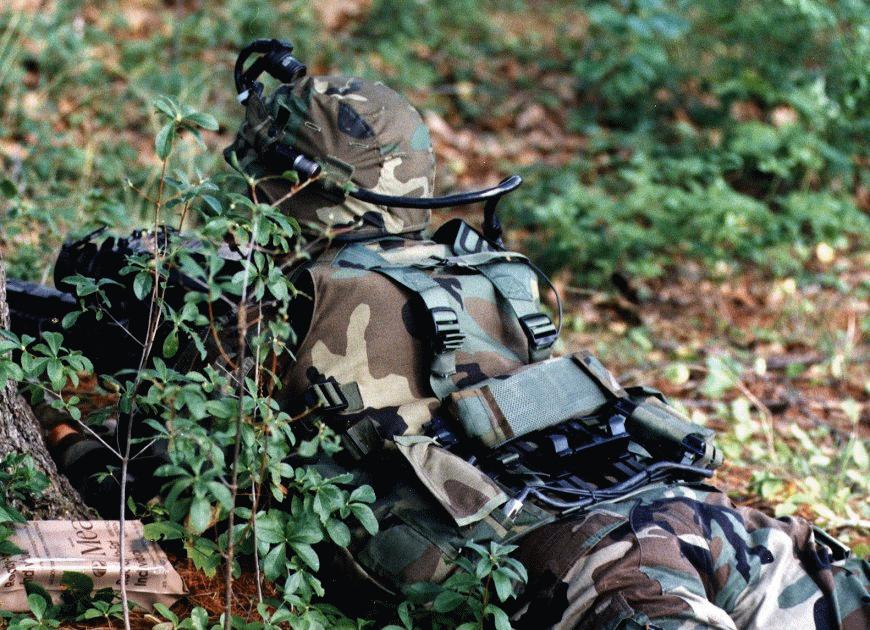
The Protective Clothing and Individual Equipment Subsystem consists of a revolutionary backpack frame design based on state-of-the-art automotive racing technology which bends with the soldier's natural body movements. The cables are integrated into the frame as necessary for the soldier's computer/radio connections. The soldier can adjust his backpack frame to adjust the load distribution from his shoulders to his hips while on the move. A simple adjustment, yet it allows the soldier to manage and carry his combat load more effectively and with less fatigue. The new LW body armor, like the helmet, provides improved ballistic protection at a reduced weight. The Land Warrior body armor includes a modular upgrade plate to protect the soldier against the small arms threat. The protective clothing and individual equipment subsystem incorporates modular body armor and upgrade plates that can stop small-arms rounds fired point-blank.
The infantryman will attach the Computer/Radio Subsystem (CRS) to his load-bearing frame. Over this goes the rucksack for personal gear. The computer processor is fused with radios and a Global Positioning System locator. A hand grip wired to the pack and attached to the soldier's chest acts as a computer mouse and also allows the wearer to change screens, key on the radio, change frequencies and send digital information. The subsystem comes in two flavors: The leader version has two radios and a flat panel display/keyboard, and soldiers have one radio. With the equipment, leaders and soldiers can exchange information. Soldiers using their weapon-mounted camera, for example, can send videos to their leaders. In its GEN II version, the computer and radio will be combined and embedded in new web gear. The system will be built around a series of cards the size of credit cards, but slightly thicker.
The CRS is integrated into the backpack frame in two sections. The upper portion contains two radios the squad radio and the soldier radio). The squad radio is based on a repackaged commercial radio and will be fully compatible with SINCGARS SIP. The soldier radio is based on a repackaged handheld commercial radio made by Motorola. This gives the soldier the ability to communicate with others in his squad, greatly improving situation awareness and survivability through increased command and control.
The lower portion of the backpack contains the computer and the global positioning system (GPS) modules. Integration of the GPS and radio into the CRS eliminates separate displays, controls and cases, thereby saving weight and reducing power requirements. Menu driven displays are controlled by the soldier from his Remote Input Pointing Device. This device is located on the chest strap and is operated by the touch of a finger. Some functions are controlled with two buttons located near his trigger finger, allowing the soldier to maintain a firing position. Imbedded into the load carrying frame are the antennas for the GPS and soldier radio. The open architecture of the CRS allows direct insertion of future upgrades in both hardware and software.
The Land Warrior software subsystem addresses the soldier's core battlefield functions, display management, and mission equipment and supply. The software subsystem includes tactical and mission support modules, maps and tactical overlays, and the ability to capture and display video images. The system also contains a power management module. Land Warrior will be interoperable on the digital battlefield. Designers set up the system so it can be updated as technology improves. The modular architecture allows for direct insertion/replacement with technology upgrades. The software subsystem allows the soldier to tailor the display, menus and functional operation of his system to his own mission needs and preferences.
continued...
The Integrated Helmet Assembly Subsystem (IHAS) uses advanced materials to provide ballistic protection at less weight than the current helmet shell. The integrated helmet assembly is lighter and more comfortable than today's helmet. The IHAS's helmet mounted computer and sensor display is the soldier's interface to the other subsystems and to the digital battlefield. Through the helmet mounted display, the soldier can view computer-generated graphical data, digital maps, intelligence information, troop locations and imagery from his weapon-mounted Thermal Weapon Sight (TWS) and video camera. This new capability allows the soldier to view around a corner, acquire a target, then fire the weapon without exposing himself, beyond his arms and hands, to the enemy. By scanning an area with his weapon's thermal sight, the soldier will be able to see an area's characteristics, including terrain and enemy positions, and will be able to see through obscurants. The thermal images will appear on a miniature helmet-mounted display. The Night Sensor Display will integrate a helmet mounted display with an image intensifier for access to his computer sensors as cited above. This will allow the soldier to maneuver and engage targets under cover of darkness.
The Protective Clothing and Individual Equipment Subsystem consists of a revolutionary backpack frame design based on state-of-the-art automotive racing technology which bends with the soldier's natural body movements. The cables are integrated into the frame as necessary for the soldier's computer/radio connections. The soldier can adjust his backpack frame to adjust the load distribution from his shoulders to his hips while on the move. A simple adjustment, yet it allows the soldier to manage and carry his combat load more effectively and with less fatigue. The new LW body armor, like the helmet, provides improved ballistic protection at a reduced weight. The Land Warrior body armor includes a modular upgrade plate to protect the soldier against the small arms threat. The protective clothing and individual equipment subsystem incorporates modular body armor and upgrade plates that can stop small-arms rounds fired point-blank.
The infantryman will attach the Computer/Radio Subsystem (CRS) to his load-bearing frame. Over this goes the rucksack for personal gear. The computer processor is fused with radios and a Global Positioning System locator. A hand grip wired to the pack and attached to the soldier's chest acts as a computer mouse and also allows the wearer to change screens, key on the radio, change frequencies and send digital information. The subsystem comes in two flavors: The leader version has two radios and a flat panel display/keyboard, and soldiers have one radio. With the equipment, leaders and soldiers can exchange information. Soldiers using their weapon-mounted camera, for example, can send videos to their leaders. In its GEN II version, the computer and radio will be combined and embedded in new web gear. The system will be built around a series of cards the size of credit cards, but slightly thicker.
The CRS is integrated into the backpack frame in two sections. The upper portion contains two radios the squad radio and the soldier radio). The squad radio is based on a repackaged commercial radio and will be fully compatible with SINCGARS SIP. The soldier radio is based on a repackaged handheld commercial radio made by Motorola. This gives the soldier the ability to communicate with others in his squad, greatly improving situation awareness and survivability through increased command and control.
The lower portion of the backpack contains the computer and the global positioning system (GPS) modules. Integration of the GPS and radio into the CRS eliminates separate displays, controls and cases, thereby saving weight and reducing power requirements. Menu driven displays are controlled by the soldier from his Remote Input Pointing Device. This device is located on the chest strap and is operated by the touch of a finger. Some functions are controlled with two buttons located near his trigger finger, allowing the soldier to maintain a firing position. Imbedded into the load carrying frame are the antennas for the GPS and soldier radio. The open architecture of the CRS allows direct insertion of future upgrades in both hardware and software.
The Land Warrior software subsystem addresses the soldier's core battlefield functions, display management, and mission equipment and supply. The software subsystem includes tactical and mission support modules, maps and tactical overlays, and the ability to capture and display video images. The system also contains a power management module. Land Warrior will be interoperable on the digital battlefield. Designers set up the system so it can be updated as technology improves. The modular architecture allows for direct insertion/replacement with technology upgrades. The software subsystem allows the soldier to tailor the display, menus and functional operation of his system to his own mission needs and preferences.
continued...