
MontyB
All-Blacks Supporter
HMS Victory, the oldest navy ship still in commission as from 1778:wink:
I saw it last year, it is an awesome sight on a sunny day.


HMS Victory, the oldest navy ship still in commission as from 1778:wink:

I saw it last year, it is an awesome sight on a sunny day.
Sad to say I have never been on board her, I doubt if I ever will now.
Another ship I wish I had visited is the SS Great Britain, built by Isimbard Kingdom Brunel, the first ship to be built with a screw prop.
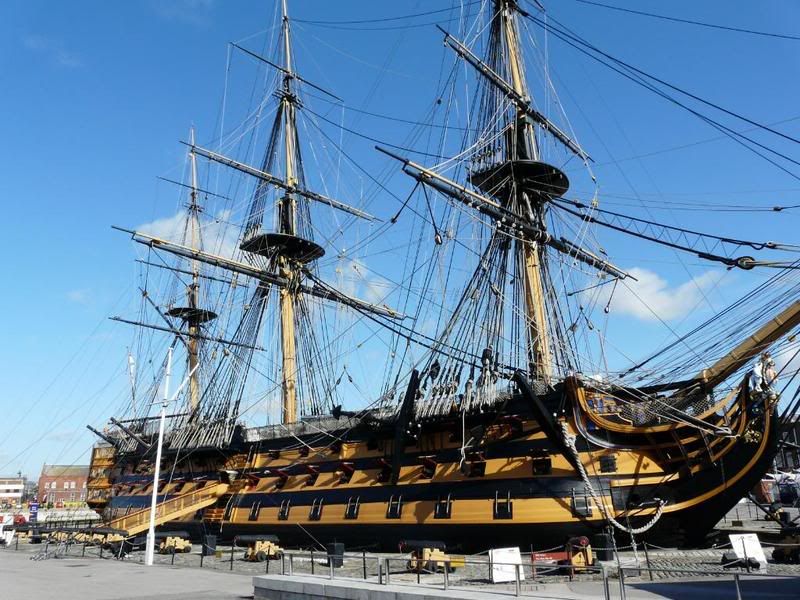
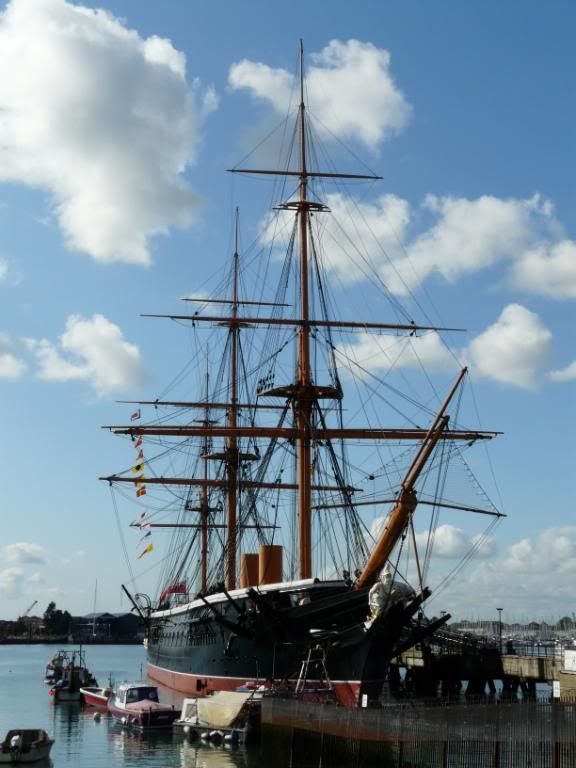


HMS Victory, the oldest navy ship still in commission as from 1778:wink:

From The HMS Victory website there is no indication that she still is a commissioned ship. Apparently she is in a dry dock where she has been since 1922.
USS Constitution History
http://www.ussconstitution.navy.mil/history.htm#1794-1797
USS Constitution maybe one of the few ships in the world to sink or capture 4 British warships.:smile:
Did not find where the ship was still commissioned.I think you have misread things...
Welcome to the official website for Nelson’s flagship-HMS Victory. Best known for her role in the Battle of Trafalgar, the Victory currently has a dual role as the flagship of the Commander-in-Chief Naval Home Command and as a living museum to the Georgian navy.
This site will help you to learn about all aspects of this great ship. Find out about the men who sailed in her, how she was built and her long and continuing Naval career. You will also find useful information to help you plan a visit to HMS Victory and discover more about our special events and activities.

From http://en.wikipedia.org/wiki/USS_Constitution
HMS Victory holds the honor of being the oldest commissioned warship by three decades
USS Constitution
Launched 1797 (no date given of actual commission)
Decommissioned 1881 or 84 years in commission
50 years out of commission.
Recommissioned July 1931 to date 2009 or 78 years.
Total years in commission 162
-------------------------------------------------------------------------------------------------
HMS Victory
Launched 1765
Commissioned 1778 -to date 2009.
231 years unbroken commission :smil:
HMS Victory - Wikipedia, the free encyclopedia
HMS Victory is still in commission as the flagship of the Second Sea Lord in his role as Commander in Chief of the Royal Navy's Home Command (CINCNAVHOME). ...
HMS Victory, Admiral Lord Nelson's flagship is the oldest commissioned warship in the world and is still manned by Officers and Ratings of the Royal Navy.
Of course, all the Tall Ships are pretty impressive.
On the ship I was on in the 1970's my division Chief used to look at us and then tell us, "How he longed for the days of Wooden ships and Iron men". Never could figure out what he meant.:???:
CHUKPIKE
"On the ship I was on in the 1970's my division Chief used to look at us and then tell us, "How he longed for the days of Wooden ships and Iron men". Never could figure out what he meant.
I can help you there. The term is from the 16-17th century, the IRON MEN refers to 2 things.
First the fact that it took an especially brave man to be a sailor on a tail ship. There were many ways a sailor could die either by accident (the most common) disease, at the captains mast, or in battle. Therefore it took a very brave (men made of iron) individuals to be a sailor.
The second meaning is that during the 17 century, sailors/soldiers still wore suits of armor. This period was a lynchpin between the Medieval period and the Imperial (gunpowder) era. Therefore "Wooden Ships and Iron Men" literally refers to the sailors on board the ships that wore mail breastplates but who were serving on modern sailships.
Date launched is her official commissioning date.
Your statement that the USS Constitution was decommissioned for 50 years is completely untrue. Go to USS Constitutions Official website for the Historical timeline.
Strange you don't reference the official websites of the two ships.
I think we can agree both ships have had long careers serving their countries.
The information I gave came from :-http://en.wikipedia.org/wiki/USS_Constitution
Over the next two years she continued her training cruises, but it soon became apparent that her overhaul in 1876 had been of poor quality, and she was determined to be unfit for service in 1881.[101] As funds were lacking for another overhaul, she was decommissioned, ending her days as an active duty naval ship; she would not sail again for 116 years.
I agree with that statement.
You did not answer my question as to when was the last time the HMS Victory was in the ocean?
For the comprehensive HMS Victory Hisory go to:
http://www.hms-victory.com/
Click on HMS Victory at top
Click on History Service Life.
According to the Constitutions own web site :-1997:
1997 July 21 - USS CONSTITUTION sailed under her own power, not under tow, for the first time in 116 years. Their words not mine.
As Monty stated, "I am not sure what the one up-manship is all about both the HMS Victory and the USS Constitution are commisioned ships but neither of them are going to see action again so in essence they are both icons of their age and little more."
I too, really don't know what this one upmanship crap proves. I could carry on with this, but its pointless. Victory as I correctly stated originally IS the oldest Warship still in commission, dry dock or not.
The statement I agreed with was Originally Posted by Chukpike View Post
I think we can agree both ships have had long careers serving their countries.
So, why did you start it in the first place?
Quote BritianAfrica;
"As funds were lacking for another overhaul, she was decommissioned, ending her days as an active duty naval ship; she would not sail again for 116 years."
It would have been a lot more enjoyable if you had gone to the official web sites in the first place, and learned about both ships.

